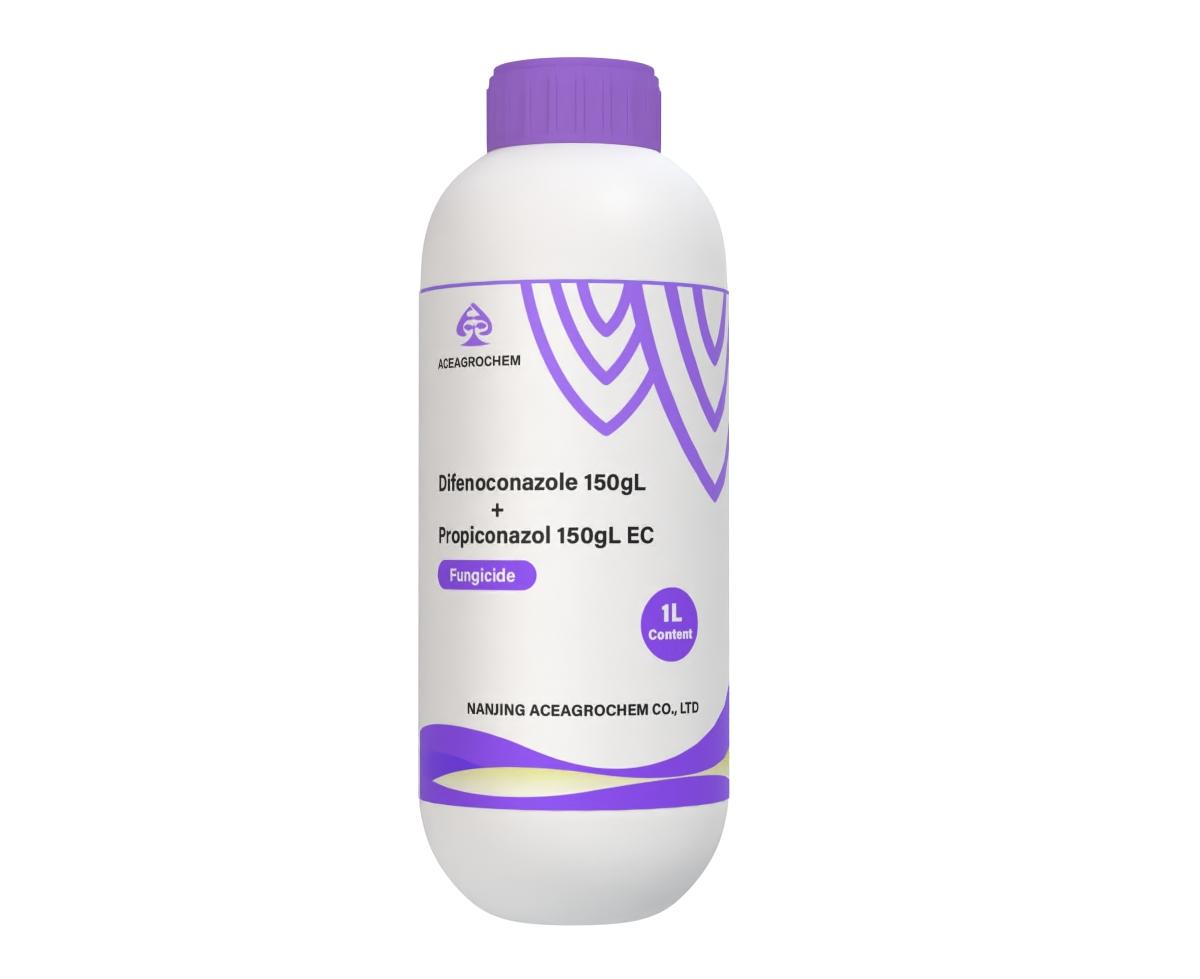
Difenoconazole 150g/L + Propiconazol 150g/L EC
Classification:
Fungicide
Formulation:
Difenoconazole 150g/L + Propiconazol 150g/L EC (Emulsifiable Concentrate)
CAS NO:
Difenoconazole: 119446-68-3;
Propiconazole: 60207-90-1
USAGE:
It is a broad-spectrum systemic fungicide used for controlling a wide range of
fungal diseases in various crops such as cereals, fruits, vegetables, and
ornamentals. Effective against diseases like rusts, powdery mildews, leaf spots,
and blights.
Pack size:
500mL, 1L, 5L, 20L/drum, or as required
Direction for Use
| Crop | Target Diseases | Dosage (150g/L Difenoconazole + 150g/L Propiconazol EC) | Application Timing | Remarks |
|---|---|---|---|---|
| Cereals | Rusts, Powdery mildews | 300-500 mL/ha | At early disease onset | 1) REI: 48 hrs 2) Max 2 applications/season |
| Fruits | Leaf spots, Blights | 400-600 mL/ha | Before disease development or at symptom appearance | Add adjuvant for better adhesion |
| Vegetables | Anthracnose, Downy mildews | 300-500 mL/ha | During the growing season at regular intervals | PHI: 7-14 days depending on the crop |
| Ornamentals | Fungal leaf diseases | 200-400 mL/ha | As a preventive or curative treatment | Check for phytotoxicity on new varieties |
Product Details
Mode of Action:
-Inhibits the biosynthesis of ergosterol in fungal cells, which is essential for
the integrity of the fungal cell membrane.
-Systemic action, translocating within the plant to protect new growth.
Benefits:
-Broad-spectrum activity against multiple fungal pathogens.
-Long-lasting protection due to systemic properties.
-Helps improve the quality and yield of crops.
Precautions:
-PPE: Chemical-resistant gloves, goggles, respirator.
-Do not apply in windy conditions (winds exceed 15 km/h).
-Do not tank-mix with alkaline Pesticide.
-Storage: Keep in a cool, dry place away from direct sunlight at 0°C to 35°C.
Environmental Hazards:
-Toxic to aquatic organisms, avoid contamination of water bodies.
-May have some impact on beneficial insects.
-Degrades in soil with a half-life of 14-28 days.